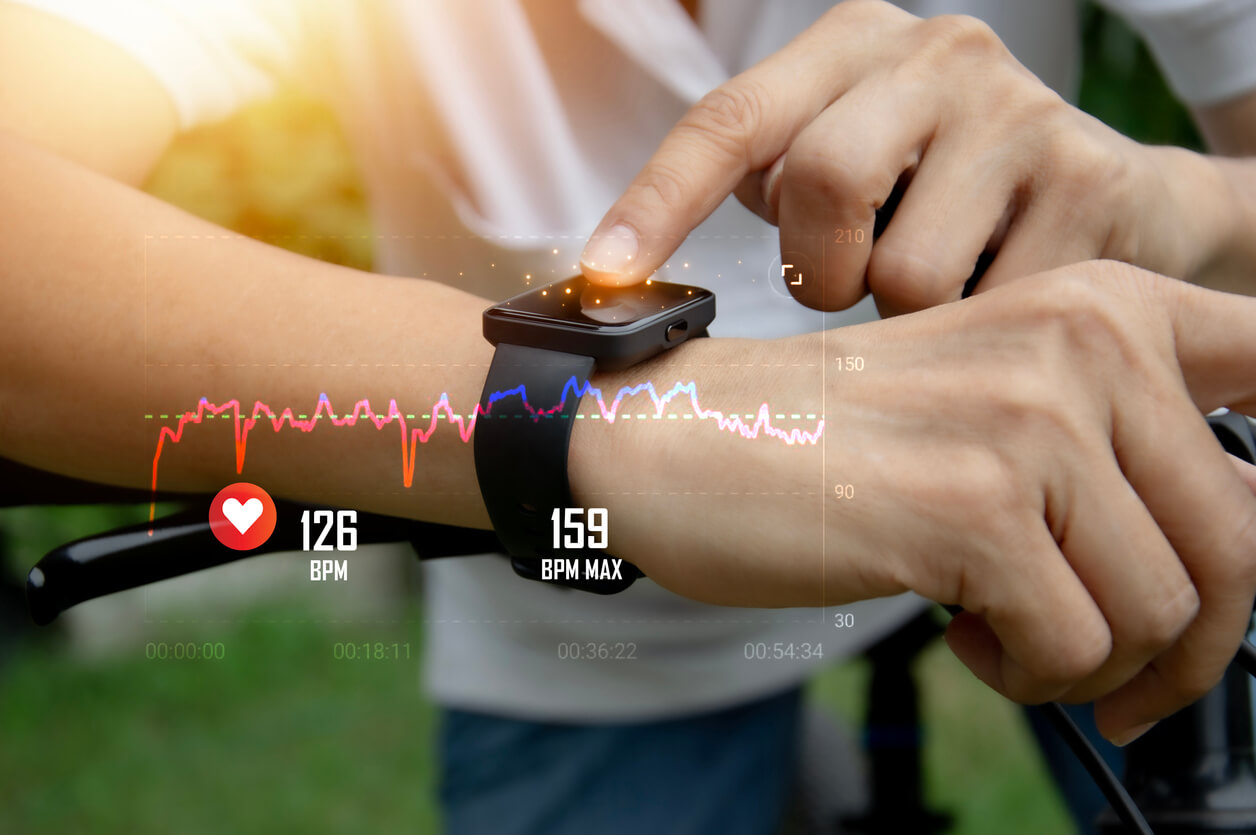
Mobile Health in the U.S. : A Comprehensive Guide to RPM, Telehealth, and Contactless Vital Sign Monitoring
F
FaceHeart Marketing
I. What Is Mobile Health and Why U.S. Market Is Entering the Mobile Health 2.0 Era
Mobile Health (often called mHealth) refers to using smartphones, tablets, and mobile connectivity to extend health services, remote care, and clinical workflows beyond the clinical settings.
In its early days, Mobile Health was mostly about SMS reminders, and self-tracking. Today, the U.S. market is raising the bar toward a more “clinical-ready” model of mobile health, which reflects growth for mHealth solutions to support real care delivery, not just engagement.
This characteristics of this evaluation includes:
Continuous data that can support patient care workflows
Platform-level integration across systems
Measurements closer to clinical expectations
One Sentence to Capture the Shift
Healthcare 2.0 was about digitizing health information such as SMS reminders, and EHR. While healthcare 3.0 is about how to use this information to improve patient care and workflow, with mobile health at the center of smarter, more connected healthcare.
As Mobile Health becomes a component of RPM and Telehealth workflows, decision-makers are no longer asking whether the features are “cool.” Instead, they focus on practical considerations:
Can hardware and logistics costs be reduced?
Will users consistently take measurements?
Can it meet the cybersecurity and compliance requirements?
Will clinicians trust and use the data in care decisions?
II. What U.S. Mobile Health Decision-Makers Care About the Most: 5 Common Deployment Barriers
In the U.S., many Mobile Health solutions don’t fail because they can’t be built. They fail because they’re buildable—but not deployable.
2.1 Hardware and Logistics Costs Erode ROI
If RPM requires distributing devices such as smartwatches, blood pressure monitors, or pulse oximeters, hidden costs add up significantly. These costs include:
Procurement
Shipping and returns
Inventory management and loss
Customer support and training
The larger the rollout, the faster these costs snowball.
2.2 Adherence is the Lifeline of Remote Patient Monitoring (RPM)
In remote care, it is difficult to maintain the consistency in vital data collection. While the measurement products are well-designed, there are still many unexpected occasions that cause the failure of data collection.
Wearable-based devices commonly run into real-world friction:
Users don’t want to wear it
They forget to wear it
Batteries die, and charging is skipped
Bluetooth pairing fails
These challenges are especially significant in older populations.
2.3 Teleconsultation’s Biggest Gap: Video Visits Without Measurement
In video visits, clinicians often rely on patient self-report. However, self-reported data are inherently unreliable and may fluctuate based on the phrasing or context of the questions. If vital signs measurement can be embedded into the Telehealth workflow, Telehealth becomes closer to evidence-based care delivery, not just online health interview.
2.4 HIPAA and Security Reviews: Video, Trackers, and Third-Party Services Are Risk Triggers
The U.S. market is highly sensitive to privacy and data protection, especially when video and identity-related data are involved. Whether a solution supports the following often determines whether it can enter healthcare and insurance environments:
Data minimization
Edge processing
Reduced cloud exposure
2.5 Compliance and Credibility: FDA Cleared + SaMD Positioning Directly Affect Procurement
For providers and payers, unclear compliance can stop a project during legal, security, or clinical review.
A clear regulatory strategy and validation pathway often matter more than features.
For providers and payers, regulatory compliance is the first consideration in procurement decisions. A clear regulatory strategy and validation pathway matter more than features. Highly innovative solutions can be paused or even rejected if the compliance is unclear.
MHealth solutions often determine their compliance and reliability from FDA clearance. Solutions that are FDA-cleared give buyers confidence that their use falls within the legal boundaries, allowing them to claim medical-grade outcomes for their products In addition, clear FDA labeling reduces friction between product and credibility, allowing decisions to move forward efficiently.
SaMD(Software as Medical Device) positioning further shows credibility. By defining responsibilities, risk levels, and use cases, a SaMD solution offers clinicians clear visibility into the data and promoting adoption..
Clear regulatory strategy and a well-defined validation pathway are more critical than innovative features. By establishing FDA clearance and positioning as a SaMD, mobile health solutions provide clinicians with transparent data, reduce legal uncertainty, and enable seamless integration and scalable deployment, laying the foundation for long-term adoption.
III. From Wearables to Contactless: Contactless Monitoring Becomes the New Mainstream
Wearables still deliver value in wellness use cases. But once you move into RPM and Telehealth, the challenges become amplified:
Hardware cost
Logistics complexity
Adherence issues
Usability barriers
That’s why the U.S. market is shifting toward:
Contactless Monitoring Solutions
Software-only solutions
In other words, measurements that once required dedicated sensors and devices are increasingly delivered through existing consumer devices such as smartphones, tablets, and laptop cameras, reducing deployment friction and making the measurements easier for individual to conduct..
IV. rPPG Video-Based Vital Signs: Transforming Any Camera into a Medical-Grade Screening Tool
rPPG is a video-based physiological signal extraction technique. Using a standard RGB camera, it detects subtle facial color changes in the skin, caused by microvascular blood flow with each heartbeat, then applies signal processing to estimate vital sign results.
4.1 Why rPPG Matters in Mobile Health
Because it directly addresses two major bottlenecks in U.S. RPM and Telehealth:
De-hardwareization: Eliminates the need to ship wearables or measurement devices, reducing deployment and operational costs
Lower user friction: Users simply open the app and look at the camera, making measurements easier and adherence more manageable
4.2 FaceHeart’s Role
FaceHeart Vitals™delivers contactless, camera-based measurement, empowering Mobile Health platforms to shift vital sign monitoring from hardware dependence to software-based solutions.
For the U.S. market, this typically means:
Scalable across large user populations
Seamless integration into Telehealth workflows
Simplified privacy/security design through data minimization
Standardized, repeatable workflows instead of relying on users to measure only when convenient
FaceHeart transforms smartphone cameras into a vital sign monitoring device, enabling Mobile Health to evolve from wearable-based monitoring to contactless, seamlessly integrated care workflows.
V. Three High-Value Mobile Health Scenarios: Patient Monitoring, Telehealth, and InsurTech
For hypertension, cardiovascular risk assessment, post-operative follow-up, and chronic disease management, regular measurement whether enabled by Remote Patient Monitoring Devices or contactless, software-only workflows is more valuable than occasional spot checks.
When contactless measurement is integrated into daily routines–after waking up, before medication, before sleep–it encourages users to manage their health regularly..
FaceHeart Vitals™ contactless measurement is especially suitable for:
Providers who want to expand coverage without hardware logistics and ongoing support costs
RPM programs that require higher adherence and real-time measurement
5.2 Telehealth Integration: Embed Measurement Into the Video Visit Flow
The ideal Telehealth workflow is not just schedule and call, but a structured sequence:
The patient enters the virtual waiting room
The system conduct a 60-second contactless measurement
When the clinician connects, a real-time vital-sign snapshot is already available
Additional measurements or follow-up indicators can be triggered if needed
This shifts Telehealth from a communication channel to a true remote-care workflow, making virtual visits work like an in-clinical process.
5.3 InsurTech and Personalized Underwriting: Reduce Underwriting Costs With Mobile Health
Insurance and financial services organizations often aim to reduce in-home health examination costs and accelerate underwriting decisions.
When a Mobile Health provides a consistent, standardized, and real-time health measurement flow, it can improve the workflow efficiency of underwriting data collection and enable more flexible risk assessment strategies, without relying on hardware or in-person hospital visit.
VI. Solution Comparison: Wearables vs. Contactless Video-Based Measurement
Comparison | Traditional Wearables | Contactless Video-Based Measurement (FaceHeart) Data capture | Requires skin contact (watch, band, patch) | Contactless (standard camera with image processing) Hardware dependence | High: purchase, ship, retrieve, maintain | Low: uses existing mobile devices Deployment cost | High: hardware + logistics + user support | Lower: software licensing Adherence risk | Common issues: not worn, battery, pairing failures | Lower friction: short, guided, selfie-like flow, reduced friction Telehealth integration | Often require extra hardware or manual input | Can be embedded directly into remote visit flows Privacy/data risk | Varies by vendor architecture | Can be designed for data minimization and on-device processing (by design) Best-fit scenarios | Continuous tracking, fitness, long-duration wear | Spot checks, pre-visit vitals, rapid screening, remote workflows
VII. Deployment and Technical Architecture: Embedding Measurement Into Your App and Platform
In the U.S. market, leading mobile health solutions are not defined by simply having measurement, but by whether the measurement can:
Go live efficiently
Fit naturally into existing workflow
Be accepted by regulatory and compliance frameworks
7.1 Typical Deployment Path
A common deployment process includes:
Define the use case: daily RPM measurements, pre-visit Telehealth vitals, post-op follow-up
Select metrics and cadence: required versus optional measurements
Choose integration approach: in-app SDK, embedded, or API-based integration
Design data flow: results into a backend system, EHR, or care dashboard
Set permissions and audit: who can view, export, and trigger alerts
Pilot validation: adherence, completion rate, workflow, and support burden
Scale rollout: make measurement a routine habit, not a feature users must search for
7.2 FaceHeart Recommended Deployment Checklist
Key technical and operational considerations include:
Do facial images need to be uploaded to obtain health insights or recommendations?,
Can measurement be embedded directly into the telehealth workflow rather than exposed as a standalone action?
Can results be output as structured data fields for EHR or care platform integration?
Is there a compliance strategy and validation pathway (e.g.,SaMD positioning, intended claims, and documentation readiness)?
VIII. Compliance and Risk Management: FDA/SaMD and Data Governance Strategy
In the U.S., compliance cannot be treated as an afterthought; it must be built into the system architecture from day one.
8.1 Data Governance Considerations
Mobile health deployments often face operational and compliance challenges related to how health data is collected, stored, and managed. These challenges may arise from factors such as:
Over-collection of data
Heavy reliance on cloud storage
Integration of multiple third-party services
To support responsible data governance, the implementation approach focuses on:
Clearly defining required data
Establishing clear controls for how data is collected, processed, and shared
Implementing access management, auditability, and retention policies
Documenting privacy and security requirements in deployment materials and architecture diagrams
8.2 FDA Clearance and SaMD Regulatory Consideration
Whether your health data can be used in a workflow often depends on regulatory positioning and the availability of supporting evidence. There are several factors needed consideration includes:
Clearly defining intended use and marketing claims, avoiding unnecessary FDA scrutiny and escalation into higher-risk regulatory classifications
Increase telehealth efficiency: vital sign measurements are available at the start of the visit, reducing back-and-forth questions and delays
When a camera-based health check-up feature is integrated into the workflow–not treated as a standalone feature–improvement in adherence and outcomes become visible and measurable.
X. FAQ
Q1: What’s the difference between Mobile Health and RPM?
Mobile Health is the broader category, that refers to the use of mobile or wireless tech to support wellness, healthcare services. Remote Vital Signs Monitoring, on the other hand, is a high-value subset of mobile health, focused on a remote andregular tracking health data that directly supports clinically monitoring workflows, particularly for chronic disease management.
Q2: Why does Telehealth need Contactless Vital Sign Measurement?
Because video visits often deliver conversation without objective measurement. Embedding Contactless Vital Sign Measurement before the visit provides clinicians with a real-time physiological snapshot at the moment of connection, improving both telehealth efficiency and clinical decision-making.
Q3: Does rPPG technology require a special camera?
Not necessarily. rPPG can run with standard RGB cameras that commonly found in daily mobile devices. The performance mainly depends on factors such as algorithm design, lighting conditions, signal quality control, and workflow implementation rather than specialized camera.
Q4: Does video-based measurement raise HIPAA privacy concerns?
It depends on system architecture and data policies. When data minimization is applied and retention or upload are limited and prioritizing on-device or edge processing over cloud-based processing, this strategy can enhance the privacy protection and simplify the review process.
Q5: How can FaceHeart Vitals™ be integrated into a mobile health application?
FaceHeart Vitals™ can be integrated into mobile health deployments through an SDK (iOS, Android, React Native, Flutter or Web) that embeds the measurement flow, along with APIs to send results to backend systems, care dashboards, or EHR integration layer.
XI. Conclusion: The Next Competitive Barrier in Mobile Health Is De-hardwareization + Compliance + Workflow Integration
The U.S. Mobile Health market is already crowded with apps or wearables. Real differentiation comes from reliable the data accuracy, the ability to reduce deployment friction, seamless integration into RPM and Telehealth workflows, and meeting security and compliance requirements. Contactless, video-based measurement using rPPG provides a practical solution by shifting hardware dependence into a software. This allows vital-sign measurement to become a simple, standardized routine rather than a burden. When measurement becomes frictionless and integration is smoother, Mobile Health programs are much more likely to be successfully deployed and scaled in the U.S. market.
Disclaimer: FaceHeart Vitals™ is not intended for diagnostic purposes. If you have any health concerns, please consult your healthcare provider.